
As of March 2026, Minimum.com has been acquired by Novisto - cemeting Novisto’s position as the most comprehensive, "all-in-one" sustainability platform, designed to serve as the single source of truth for global enterprises navigating an increasingly complex regulatory landscape.

The 5 Characteristics of Actionable Environmental Data
Let’s break down the five characteristics that make environmental data decision-grade, and ready to drive measurable progress across your value chain.
Most organisations collect environmental data to meet reporting requirements, but few use it to guide decisions. The truth is that most datasets weren’t built for the way businesses actually operate. They’re fragmented, out of date, and hard to use. When sustainability leaders are required to use it make decisions, this kind of data simply doesn’t hold up.
Actionable environmental data, by contrast, is structured, verified, and refreshed fast enough to guide real business decisions. It connects environmental performance directly to cost, risk, and growth - turning sustainability metrics into operational insight.
Why most environmental data isn’t actionable
Many sustainability teams are still working with data that’s fragmented, outdated, and built for disclosure rather than decision-making. It’s often compiled manually from spreadsheets, estimates, and industry averages, offering a hazy picture of the past rather than insight for what comes next.
That kind of information might satisfy compliance requirements, but it isn’t decision-grade data. It doesn’t identify opportunities, track change in real time, or create accountability across departments.
To move from reporting to results, organisations need environmental data that meets five clear criteria.
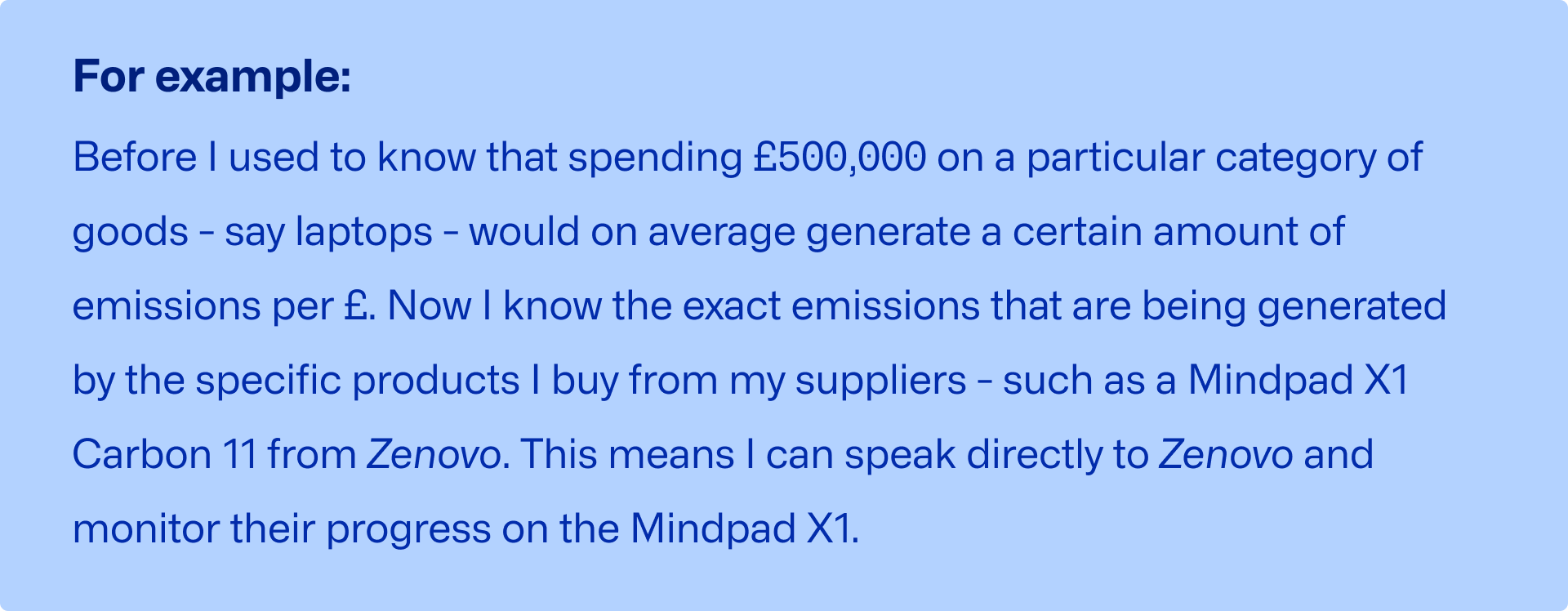
1. Granular: Capture the full picture
Actionable data goes beyond averages. It’s specific to your actual operations - the difference between two suppliers, two materials, or two production lines.
Granularity transforms a single footprint figure into a map of practical levers. It helps procurement teams prioritise cleaner suppliers, or product designers choose lower-impact materials.
2. Timely: Keep pace with decisions
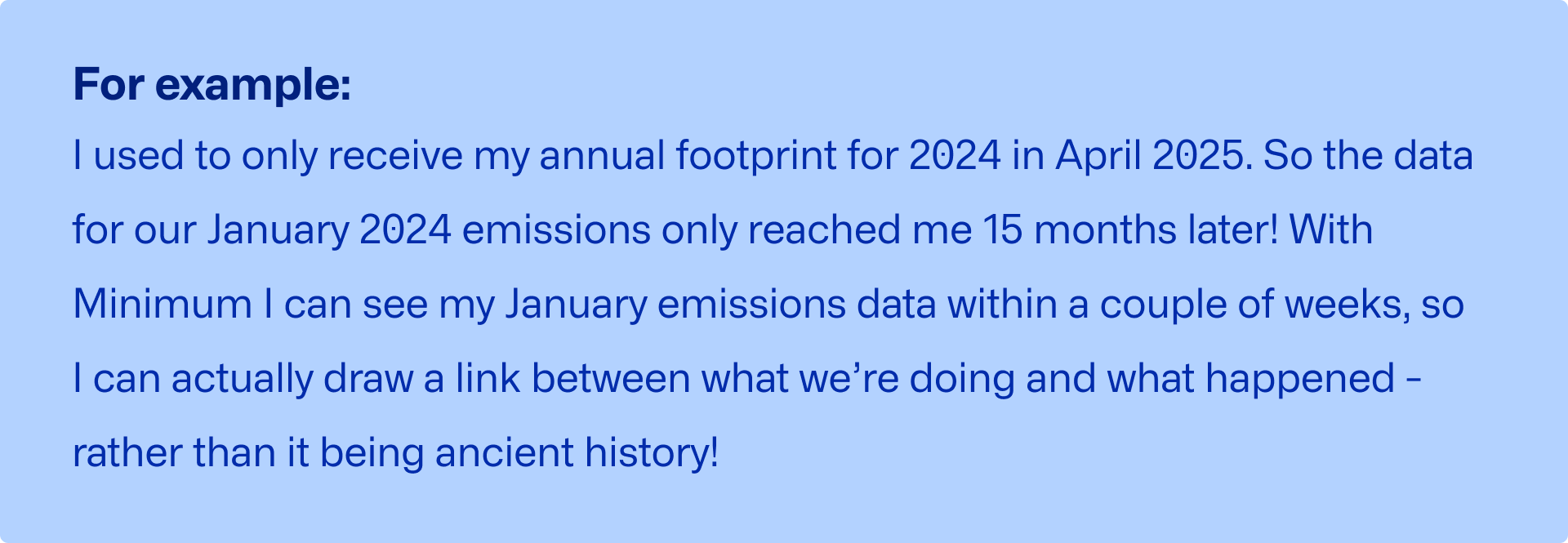
Annual or quarterly reports can’t guide weekly procurement meetings or monthly budget reviews.
For data to be actionable, it must arrive at the same rhythm as business decisions: monthly, weekly, or even in real time.
Timely information allows sustainability leads to act while there’s still room to influence outcomes, not months later when budgets are locked.
3. Accurate: Trust the numbers
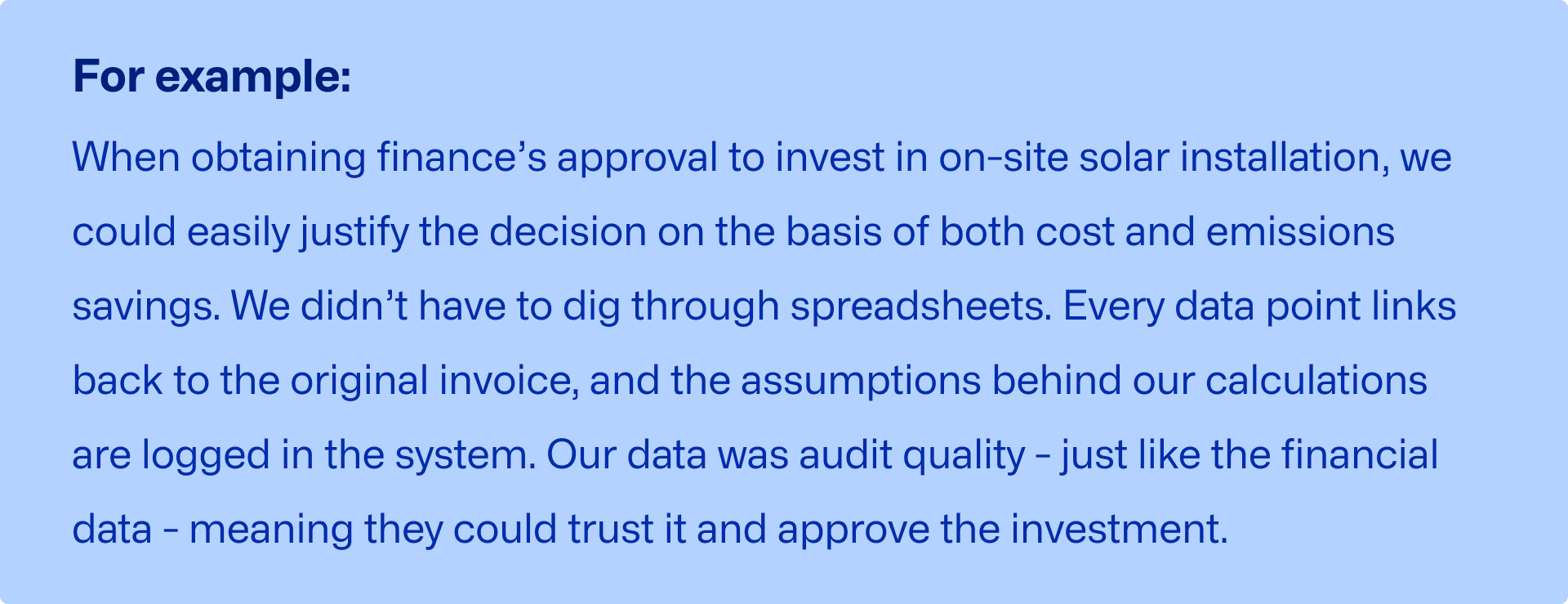
Data that informs financial planning must meet financial-grade standards.
Accuracy means traceable sources, transparent assumptions, and automated checks for errors or anomalies. Without that rigour, sustainability data risks becoming a liability under audit.
Reliable data, on the other hand, gives leaders the confidence to connect environmental metrics to cost reduction, risk management, and growth.
4. Shareable: Connect every team
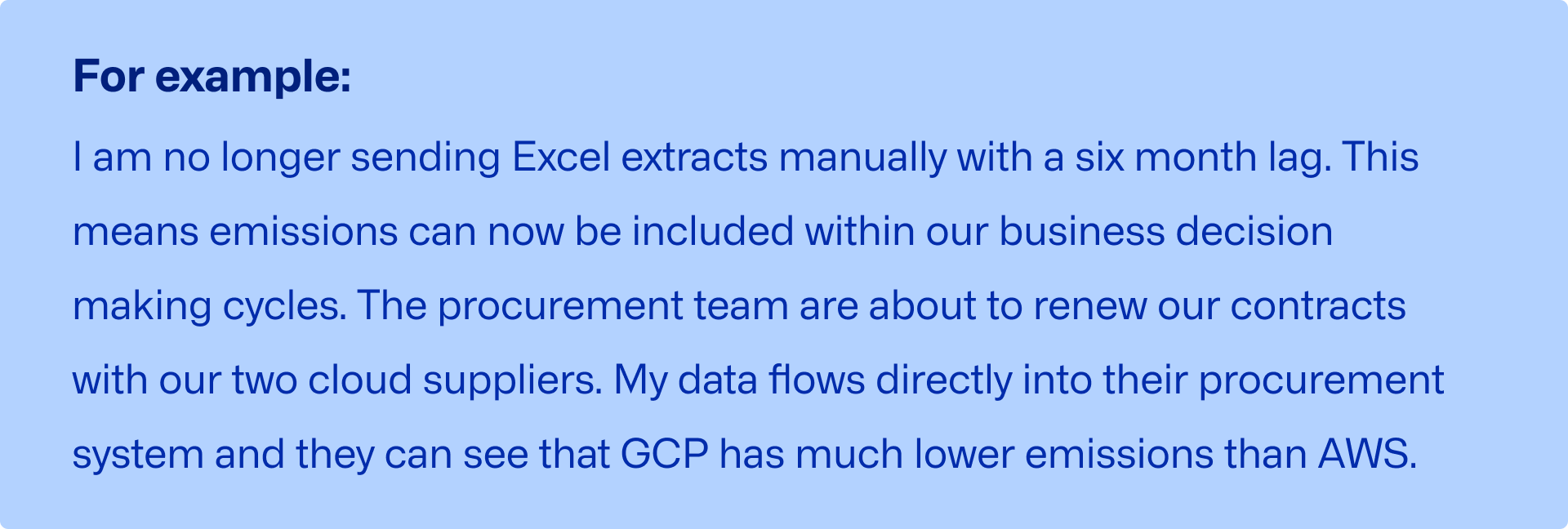
Environmental data stuck in spreadsheets can’t drive change.
To create value, it must move freely between systems, into procurement tools, dashboards, budgeting models, and disclosures. Shareable data ensures that procurement, finance, and sustainability teams work from the same version of truth.
When information flows easily, it becomes part of daily decision-making instead of an annual reporting exercise.
5. Context-specific: Link data to performance
Data becomes actionable when it speaks the language of the business.
That means aligning it with how performance is already tracked; by spend, by output, or by business unit. Metrics like emissions per product or per $ revenue help teams link impact directly to financial outcomes.
Context-specific data transforms sustainability from a side report into a core management tool.
Not all service providers can generate actionable data
Even when organisations invest in sustainability reporting, the quality and usability of the data can vary dramatically depending on the tools and approaches they use.
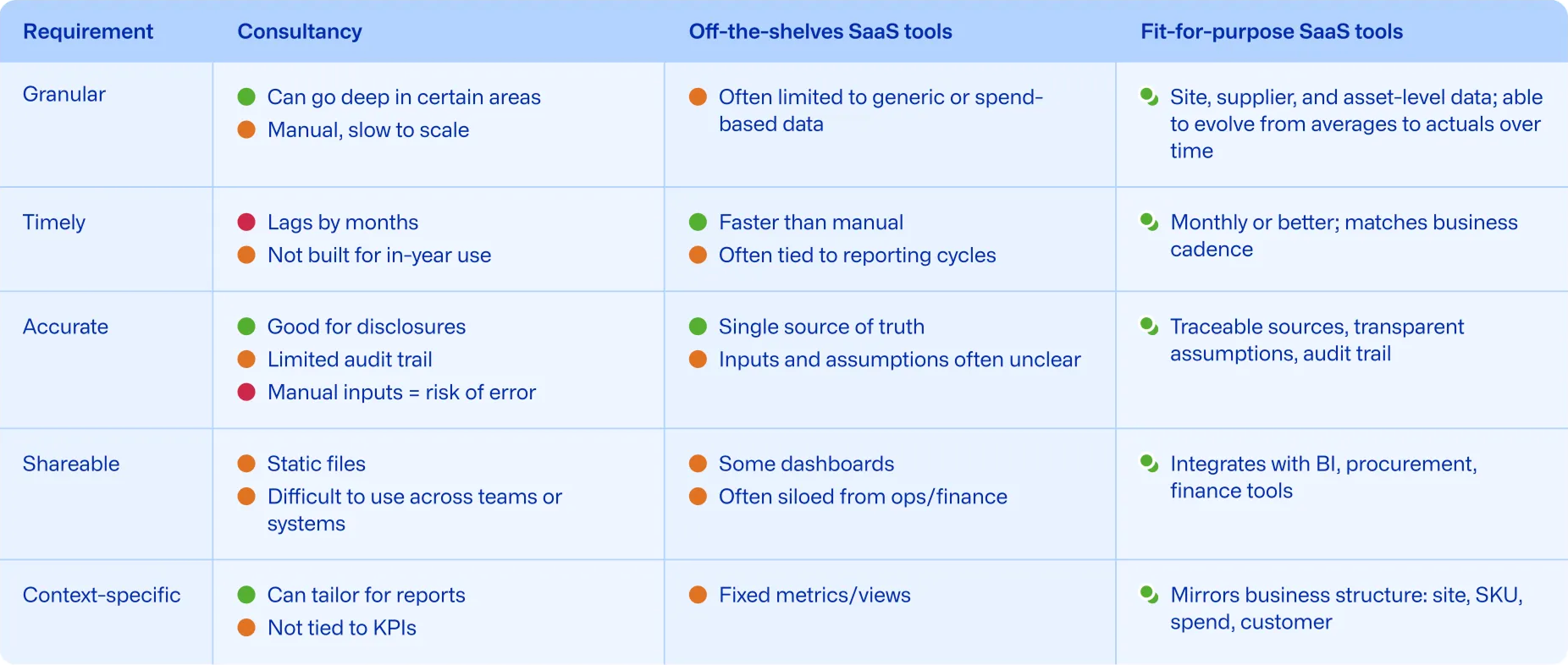
Traditional consultancies often deliver depth in certain areas but rely on manual processes that make it hard to scale or update data in-year. The result is detailed reports that quickly go out of date: useful for disclosure, but not for ongoing management.
Many off-the-shelf SaaS tools improve efficiency but are typically built around generic datasets or spend-based calculations. They offer convenience, not precision, and their outputs are often tied to reporting cycles rather than business decisions.
By contrast, fit-for-purpose SaaS tools are designed to collect, validate, and share data continuously. They provide site- and supplier-level granularity, traceable audit trails, and integrations that connect sustainability data with finance and procurement systems. This makes environmental data not just reportable, but truly actionable.
From reporting to results
These five characteristics define the difference between data that’s only good enough for disclosure and data that’s decision-grade.
When your environmental data meets all five, sustainability and business performance become two sides of the same equation. Improving data requires systems that collect, validate, and share information continuously, not once a year. Teams that make this shift stop reporting change and start managing it.
Minimum helps sustainability teams build the systems that make accurate, timely, and connected data possible, turning environmental insight into business value that lasts.
