
As of March 2026, Minimum.com has been acquired by Novisto - cemeting Novisto’s position as the most comprehensive, "all-in-one" sustainability platform, designed to serve as the single source of truth for global enterprises navigating an increasingly complex regulatory landscape.

Meeting the Requirements for Actionable Environmental Data
We unpack the requirements for producing high-quality environmental data and show how organisations can move from static to continuous reporting.
In a recent blog, we outlined the five characteristics that define decision-grade environmental data: granularity, timeliness, accuracy, shareability and context specificity. And why they're essential to move beyond disclosure to action.
Most organisations' environmental data meets some of these characteristics but few have data that meets all five at the same time.
Delivering on all five characteristics requires the right infrastructure. You need a system that captures, structures, validates and distributes environmental data with the same discipline that's applied to financial data.
Below, we outline how Minimum supports teams as they move from annual reporting to continuous, decision-grade insight.
Granular
Granularity is essential for understanding where emissions actually occur and where the strongest opportunities for reduction sit.
Minimum supports this through three core capabilities:
- Collection of primary data from diverse formats
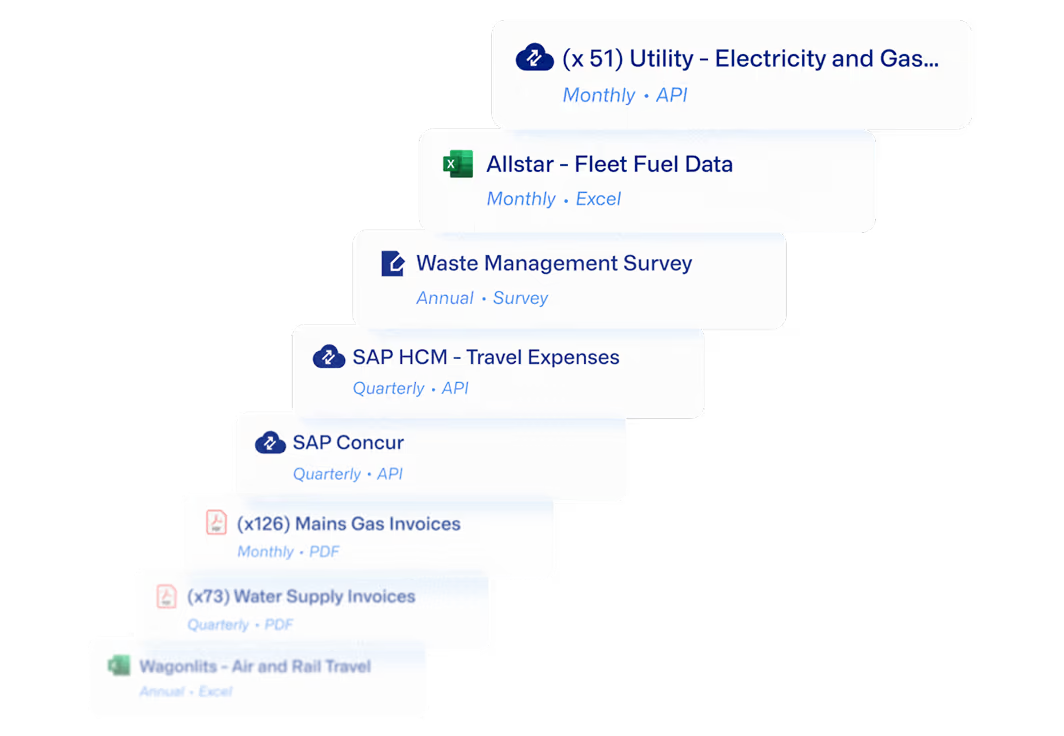
Minimum ingests data from APIs, spreadsheets, PDFs, surveys and system extracts. The goal is to enable firms' to collect the most specific data possible whether at site-level, asset-level or supplier-level information and reduce dependence on averages and estimates.
- Methodologies that improve as data quality improves
Minimum supports multiple calculation options including spend-based, activity-based and specific approaches. This allows organisations to continually improve the quality of the data while providing flexibility to work with the best data they currently have available.
- Tools that highlight opportunities for improvement
The platform identifies where gaps exist, estimates have been applied and where more specific inputs would be most valuable. This helps sustainability teams prioritise their efforts.
Timely
Environmental data must be available when decisions are being made. Data that arrives months after the fact is of limited value.
Minimum strengthens timeliness through:
- Automated data flows
Integrating with source systems and using workflow-based submissions allows for constant data capture, reducing reliance on batch-reporting.
- Standardisation of diverse inputs
Teams can upload data as they obtain it. Minimum structures and cleans data automatically, which significantly reduces the need for manual reformatting.
- Workflows and dashboards that maintain momentum
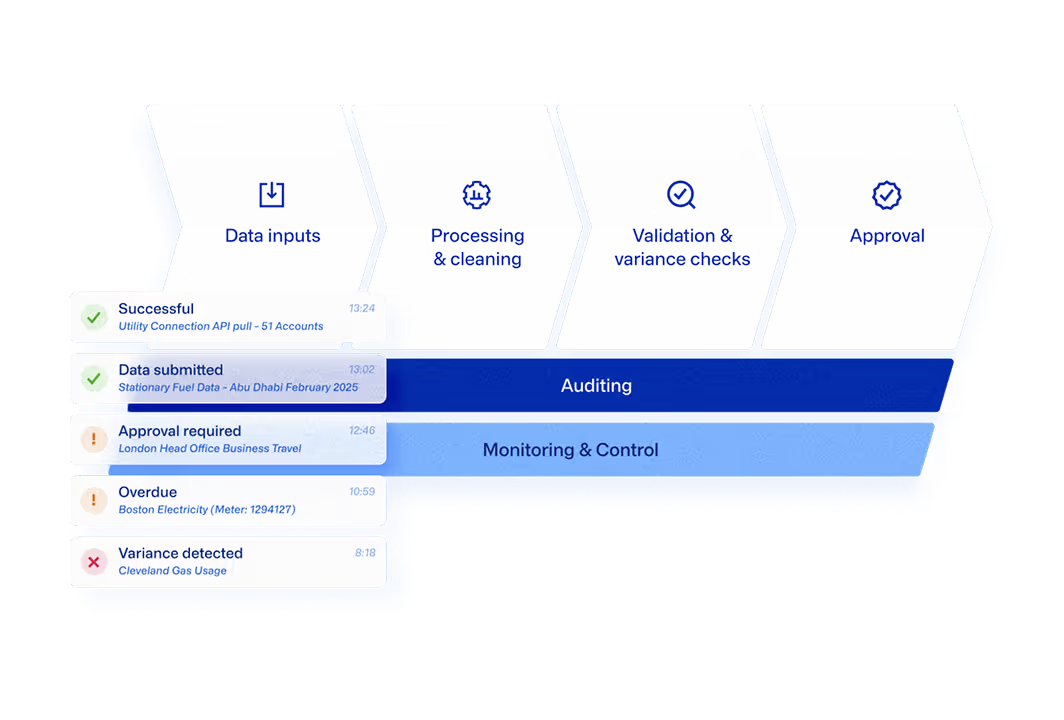
Submission tracking and automated reminders keep data collection moving while requiring limited manual oversight and provide advanced warning of delays.
- Validation at the point of entry
Data quality checks occur as data is submitted. This reduces rework during assurance periods and supports a smoother reporting cycle.
Accurate
Accuracy relies on correct calculations as well as traceability, transparency and a complete audit trail.
Minimum improves accuracy through several capabilities:
- Automatic variance checks
Anomalies and inconsistencies are identified immediately, which allows issues to be resolved before they impact calculations.
- A built-in audit log
Each emissions entry includes clear metadata showing what input data was submitted (activity data, emission factors, etc.), any assumptions that were applied, who submitted the data and when.
- Full traceability back to source
Source files, contributors and systems are linked directly to each data point. This removes uncertainty and ensures an original source of truth.
- Visibility of gaps and estimates aligned to the GHG Protocol
Missing data is identified and estimation methods are documented systematically. This supports defensibility and transparency.

Shareable
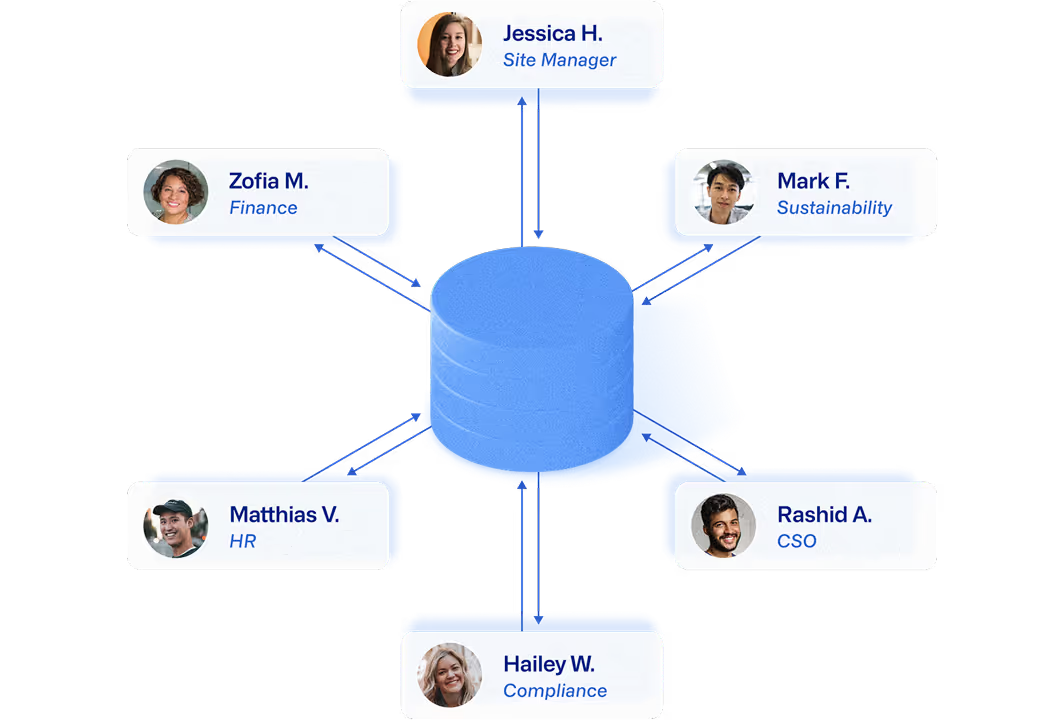
Environmental data only becomes actionable when it is available across teams. Data which is locked in static files is unlikely to be used outside of the sustainability team.
Minimum enables sharing through:
- Integration with downstream systems
Minimum’s APIs allow environmental data to flow into BI dashboards, procurement platforms and financial models without manual intervention.
- Alignment with business cadence
Data is refreshed on a schedule that reflects how other operational KPIs are updated and reviewed. This makes environmental data usable during planning, forecasting and review cycles.
Context Specific
Environmental data must reflect how the business actually operates. Insights only become useful when they are applicable to real decision making.
Minimum supports this through:
- Business-aligned data structures
Emissions can be attributed to the units that matter such as sites, suppliers, SKUs, transactions, categories or business units.
- Intensity metrics
The platform allows for creation of intensity metrics so emissions data can be contextualised against other business KPIs e.g. output, revenue, headcount, etc.
Move toward decision-grade data
Many organisations struggle to use environmental data effectively because their systems are not designed for continuous insight or cross-functional use.
The shift to decision grade environmental data begins with the right infrastructure.
If you would like to see how this works in practice, book a call with one of our sustainability experts!
