
As of March 2026, Minimum.com has been acquired by Novisto - cemeting Novisto’s position as the most comprehensive, "all-in-one" sustainability platform, designed to serve as the single source of truth for global enterprises navigating an increasingly complex regulatory landscape.

How Environmental Data Unlocks Business Value
Environmental data is often treated simply as a compliance requirement: a dataset collected to satisfy regulators and investors. Today, forward-looking organisations are realising its real potential. When environmental data is high quality, timely, and granular, it becomes a strategic business asset.
Used effectively, it drives measurable financial returns by cutting costs, reducing risk, and creating growth opportunities. It also provides the foundation for confident decarbonisation, giving companies the insight and control they need to act on emissions across the value chain. Let’s dive in:
Why Environmental Data Is a Strategic Business Asset
When environmental data is high-quality and well structured, it becomes a strategic asset that helps every part of the organisation deliver on its objectives.
To understand its value, let’s look at environmental data through three lenses:
- Risk management – helping the business stay ahead of regulation, reduce exposure to future costs, and meet investor expectations.
- Cost reduction – finding inefficiencies in energy, materials, and processes that can be addressed to improve the bottom line.
- Revenue generation – supporting new products, premium pricing, and stronger performance in sustainability-driven markets.
These benefits often overlap. The same data that helps manage regulatory risk might also reduce operating costs or support a new product line. The key is having data that’s fit for business decisions (not just disclosure).
High-quality environmental data delivers measurable business value when it informs decisions on risk, cost, and growth.
From Insight to Impact: The Double Return
When built to the right standard, environmental data delivers a double return:
- Through the insights it provides: enabling better decisions around cost, risk, and growth.
- Through the actions it enables: making it easier to plan, execute, and track decarbonisation with financial confidence.
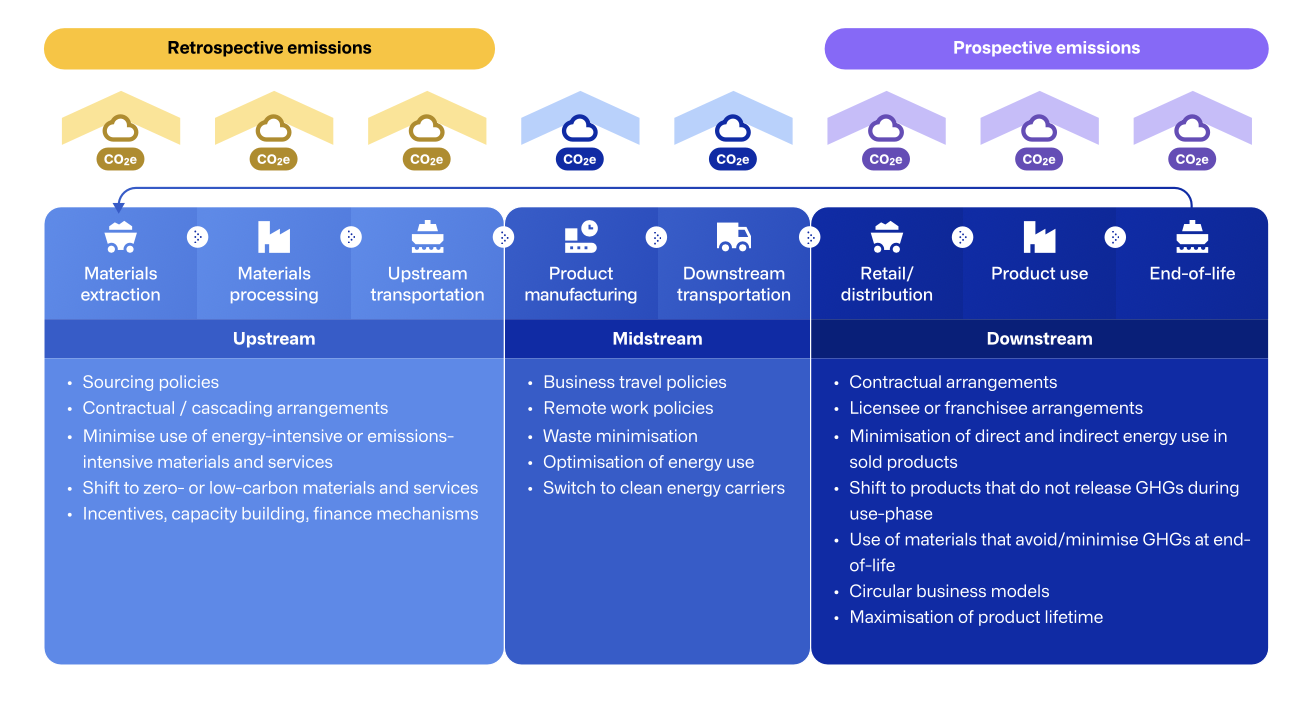
Across a typical value chain, emissions - and the opportunities to extract business value from reducing them - arise in three broad areas: upstream, midstream, and downstream. These stages span everything from sourcing raw materials to product use and end-of-life.
Each stage offers distinct opportunities not just to reduce emissions, but to cut cost, manage risk, and support growth. By understanding where these levers sit and what business functions control them, organisations can turn decarbonisation into a source of financial advantage.
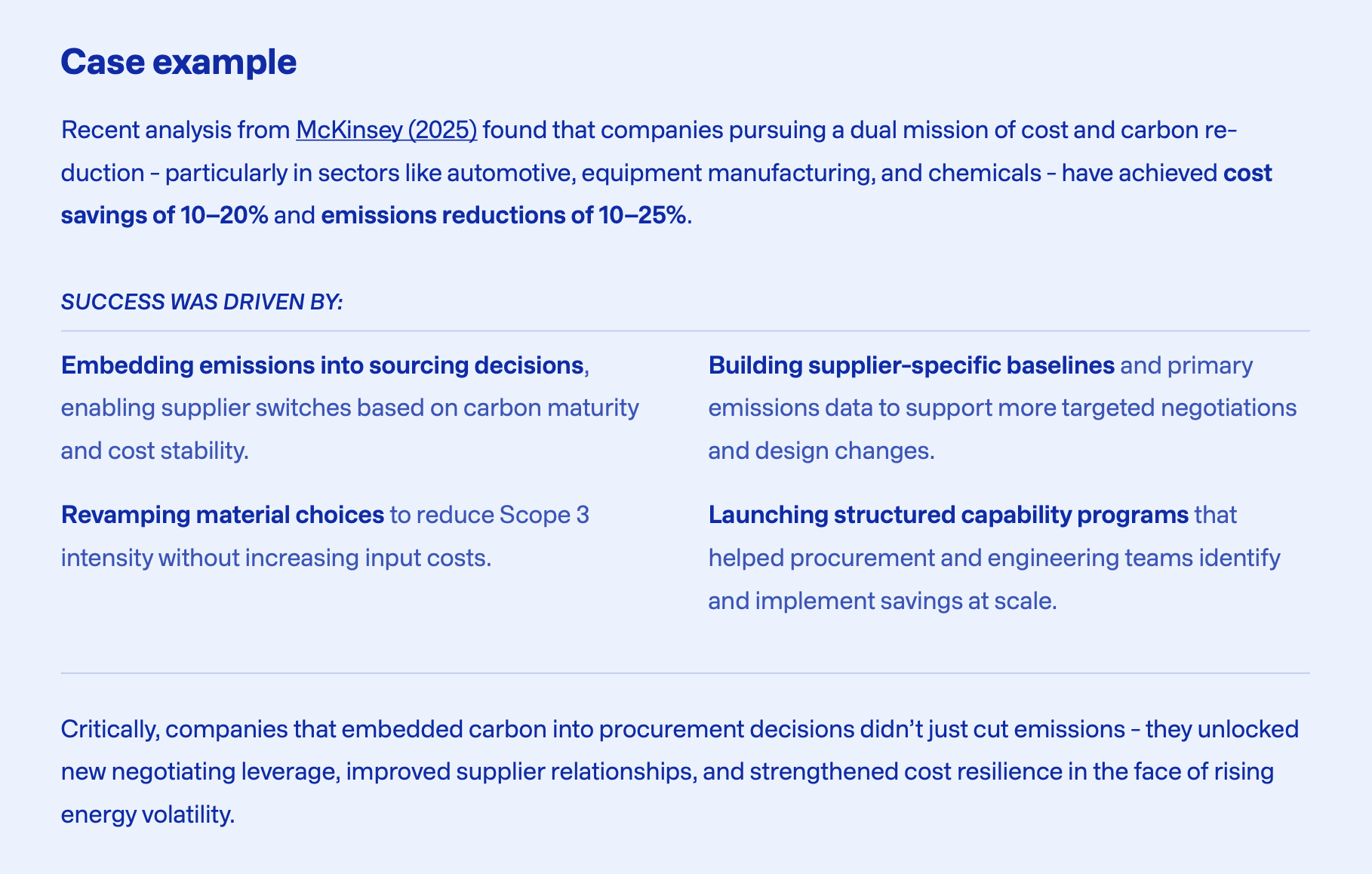
Upstream: Procurement and Supplier Decisions
Upstream covers everything the company buys - from raw materials and components to packaging, services, and inbound logistics. These activities account for a significant share of most companies’ emissions, particularly in Scope 3 Category 1 (Purchased Goods and Services) and Category 4 (Upstream Transportation and Distribution).
Environmental data gives procurement teams the visibility to make cleaner, smarter sourcing choices that deliver both cost reduction and risk management. Cleaner, more efficient suppliers often bring lower energy exposure, more stable pricing, and greater climate resilience, all of which reduce future risk.
These levers cut emissions without changing internal operations - by simply shifting spend to suppliers and materials that align with the company’s decarbonisation goals, procurement can unlock measurable returns.
They also strengthen procurement’s strategic role, enabling sourcing decisions that balance price, performance, and emissions - and helping the business stay ahead of shifting customer and investor expectations.
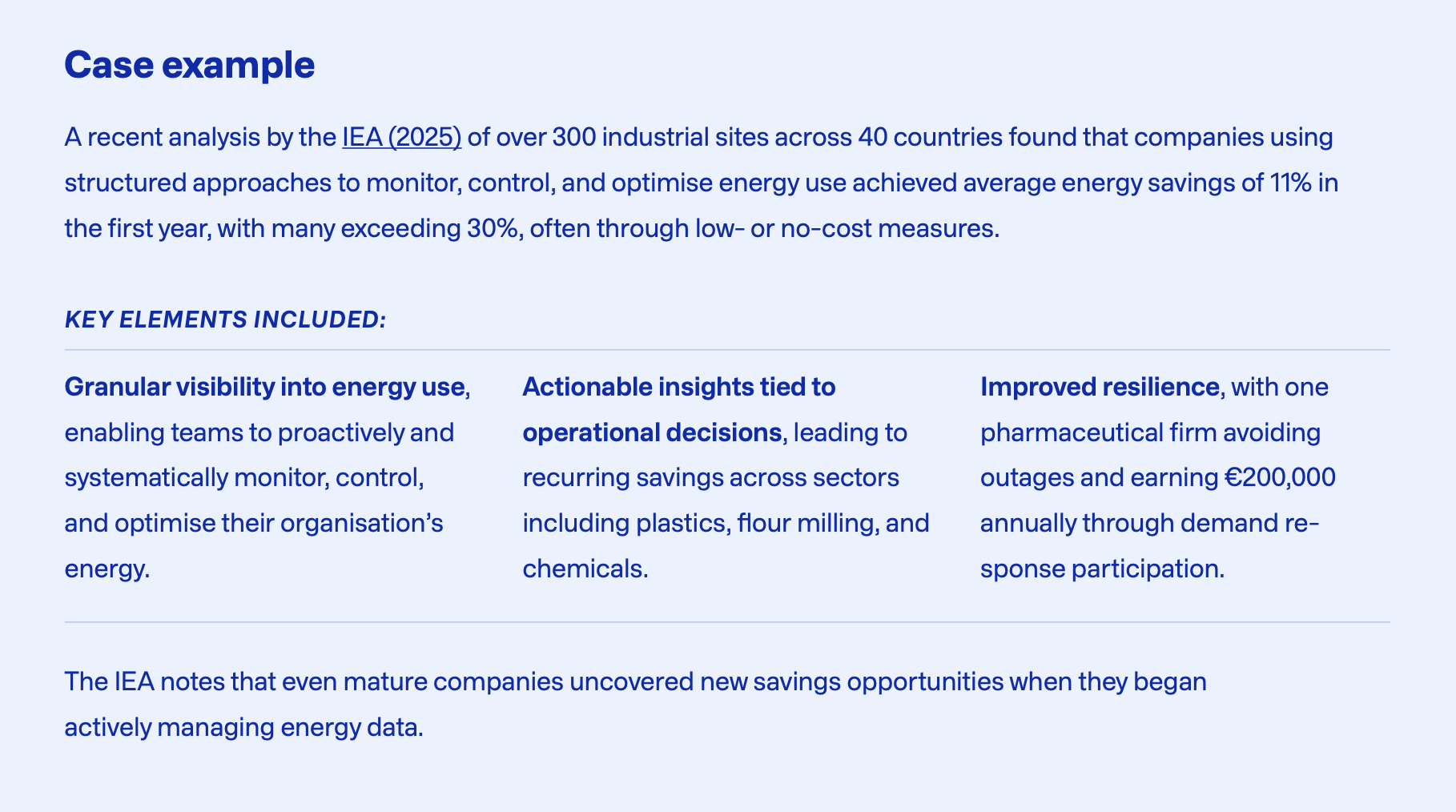
Midstream: Operational Efficiency and Cost Reduction
Midstream refers to the company’s own operations - energy use, processes, travel, and waste. This is where the business has the most direct control and where environmental data can support immediate, cost-effective improvements.
By tracking resource use at granular levels, businesses can identify inefficiencies and implement fast, measurable changes. Most midstream emissions fall under Scope 1 and 2, but savings also appear in Scope 3 via smarter purchasing, waste reduction, and travel management.
Downstream: Growth and Market Differentiation
Downstream covers everything after a product leaves the company - from customer use to logistics and end-of-life treatment. Emissions here typically fall under Scope 3 Category 9 (Downstream Transport) and Category 11 (Use of Sold Products).
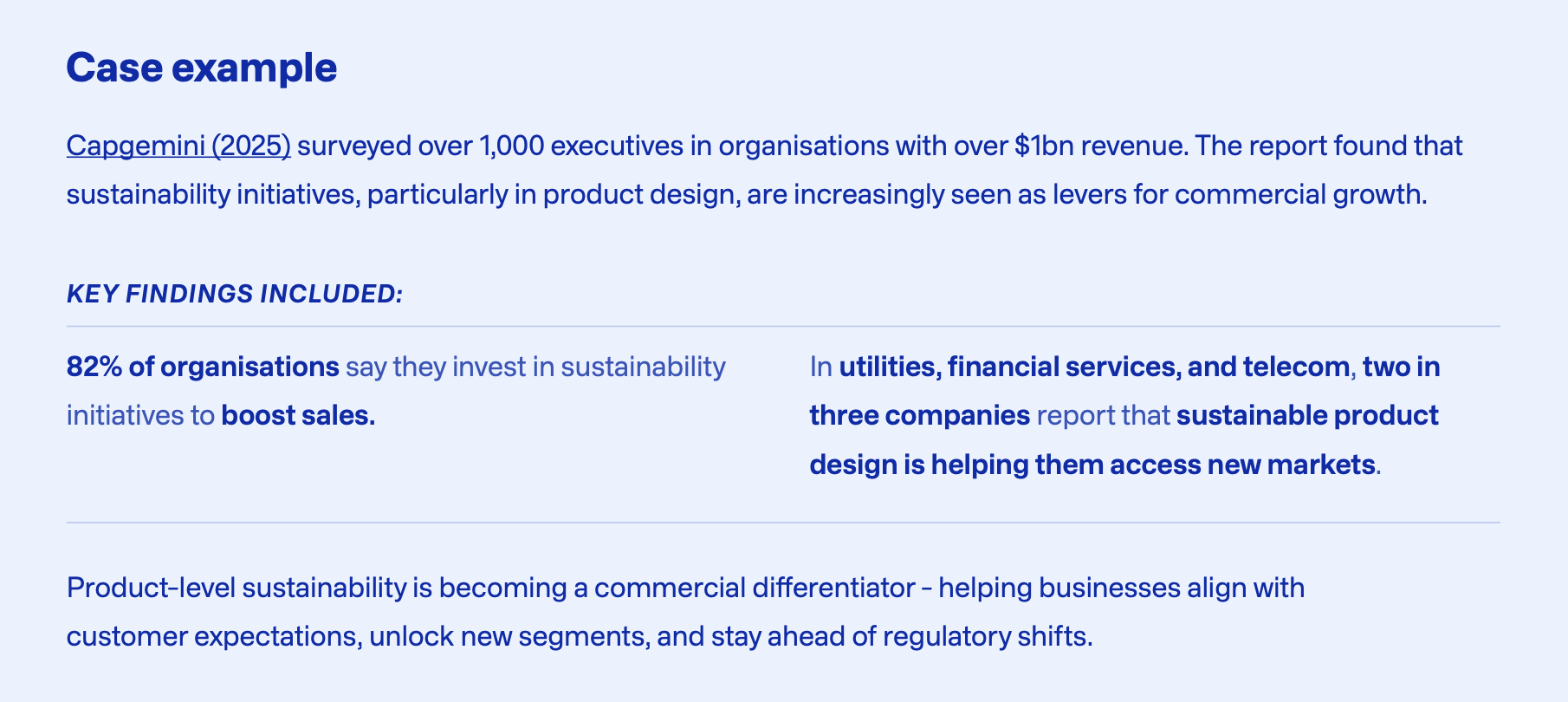
Environmental data enables companies to design lower-carbon products, embed emissions standards into logistics contracts, and support customer compliance - all of these are actions that unlock market access, pricing power, and long-term differentiation.
Capgemini surveyed over 1,000 executives in organisation with over $1bn revenue. The report found that sustainability initiatives, particularly in product design, are increasingly seen as levers for commercial growth.
Turn Data Into Direction
Across every part of the value chain, environmental performance can translate into financial performance. High-quality data exposes inefficiencies, highlights risk, and points to where reductions create measurable business value.
To improve the accuracy and consistency of that data takes time, you need to be building systems that teams can rely on, so progress can be tracked, compared, and defended. The stronger those systems are, the easier it becomes to move from gathering information to driving change.
Minimum gives sustainability teams the structure and visibility to do exactly that - making environmental data accurate, consistent, and ready for decisions that last.
